
A note from Mahoney Dermatology Specialists
If you live in the Tampa Bay area, you’ve probably heard the news: Dengue fever is spreading locally here in Florida, with Hillsborough and Pinellas counties at the center of this year’s outbreak. As your local dermatology practice, we want to keep you informed with the latest numbers from the Florida Department of Health (DOH) — and give you practical, dermatologist-backed guidance on how to protect your skin from mosquito bites without compromising your safety.
The Latest Numbers from the Florida DOH
According to the Florida Department of Health’s most recent arbovirus surveillance report (week ending August 29, 2026), 73 locally acquired dengue cases have been reported statewide so far this year. Here’s the county breakdown:
· Hillsborough County: 59 cases — by far the largest cluster in the state
· Miami-Dade County: 7 cases
· Pinellas County: 5 cases
· Palm Beach and Pasco counties: additional cases reported
Most of these infections began with symptoms in July and August. Of particular note for Pinellas residents: the county’s first cases this year marked its first locally acquired dengue fever transmission in over 15 years, according to county mosquito control officials — meaning the virus is now circulating in local mosquito populations here, not just arriving via travelers returning from endemic areas.
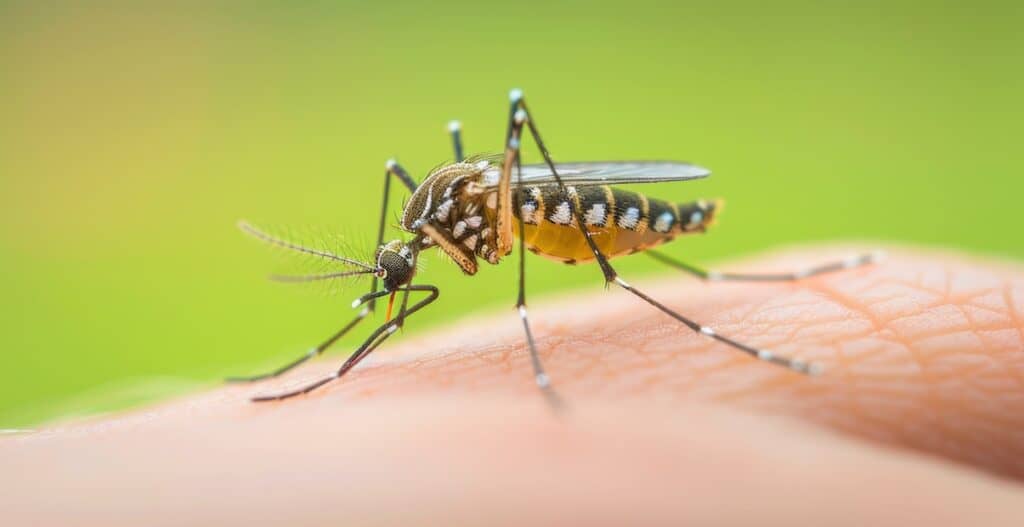
Both Hillsborough and Pinellas counties remain under an active mosquito-borne illness alert from the DOH. Mosquito control crews are conducting truck and aerial spraying, and health officials are urging residents to eliminate standing water around their homes, where Aedes aegypti mosquitoes—the species that spreads dengue—lay their eggs.
Dengue symptoms typically appear within about 15 days of a bite. They can include sudden fever, severe headache, pain behind the eyes, muscle and joint pain, nausea, vomiting, and sometimes a rash. The rash can initially look like flushing or a sunburn and appear on the face, neck, and chest. The classic rash appears on days 3-5 and consists of pink flat or slightly raised spots on the trunk, arms, and legs. Sometimes it can appear as “islands” of white in a sea of red, or even pinpoint bruises. If you or a family member develops these symptoms after a possible mosquito bite, contact your doctor promptly.
Rarely, dengue fever can worsen after the initial rash to dengue hemorrhagic fever, which can be life-threatening. This causes a rapid drop in platelet levels and can lead to shock, bleeding inside the body, organ damage, and death. Other symptoms include bruising, bleeding from the nose or gums, blood in urine/stools, or vomit, severe stomach pain, crankiness, rapid or labored breathing, or tiredness. Seek immediate medical attention if these symptoms appear.
Mosquito Bite Prevention: What Dermatologists Recommend
Since dengue is spread entirely through mosquito bites, preventing bites is your best defense. The American Academy of Dermatology (AAD) offers the following guidance for using repellents and protective measures safely on the skin:
1. Choose the right repellent
Use an insect repellent containing 20% picaridin or 20-30% IR3535, applied to exposed skin and even to clothing. Always follow label instructions and reapply as directed. DEET at 20-30% is also very effective.
2. Layer repellent and sunscreen correctly
If you’re wearing both, apply sunscreen first, let it dry, then apply insect repellent. Avoid combination sunscreen-repellent products — sunscreen needs to be applied liberally and reapplied often, while repellent should be applied only every 4-6 hours and more sparingly, so combining them undermines both.
3. Dress to reduce exposed skin
When you know you’ll be outdoors at dawn, dusk, or in shaded or wooded areas, wear long-sleeved shirts, long pants, socks, and closed-toe shoes. Tuck your shirt into your pants and pull socks over your pant legs for extra protection.
4. Treat clothing, not skin, with permethrin
You can pre-treat outer layers of clothing with a permethrin-based repellent for added protection. Let treated clothing dry for at least two hours before wearing it—permethrin is meant for fabric and gear, not direct skin application.
5. Use bed nets if needed
If you’re spending time outdoors overnight, a bed net pre-treated with pyrethroid insecticide adds another layer of protection, especially if tucked under the mattress.
6. Stay informed
Watch DOH mosquito-borne illness alerts for Pinellas and Hillsborough counties, and take extra precautions in neighborhoods where local transmission has been confirmed.
A Reminder for Our Patients
Insect repellents are safe and effective when used as directed, including for most pregnant and breastfeeding women, but if you have sensitive skin, eczema, or another skin condition, talk with us about the right repellent formulation for you. And if you develop a rash, fever, or body aches after a mosquito bite, please don’t wait; contact our office or see a board-certified dermatologist so we can help rule out a transmitted illness.
Stay safe out there, Tampa Bay, and don’t forget the bug spray along with your sunscreen this season.
— Dr. Mahoney and the team at Mahoney Dermatology Specialists
Sources: Florida Department of Health, Florida Arbovirus Surveillance Week 34 Report (August 23–29, 2026); DOH-Pinellas and DOH-Hillsborough Mosquito-Borne Illness Alerts; American Academy of Dermatology, “Tips to Prevent and Treat Bug Bites” (aad.org)